Breezeway
יצירת משימה משיחת אורח ושמירת קישור ביניהן.
לשמור על ההקשר בין התקשורת לביצוע.
למקור הרשמי
 Rut Avor

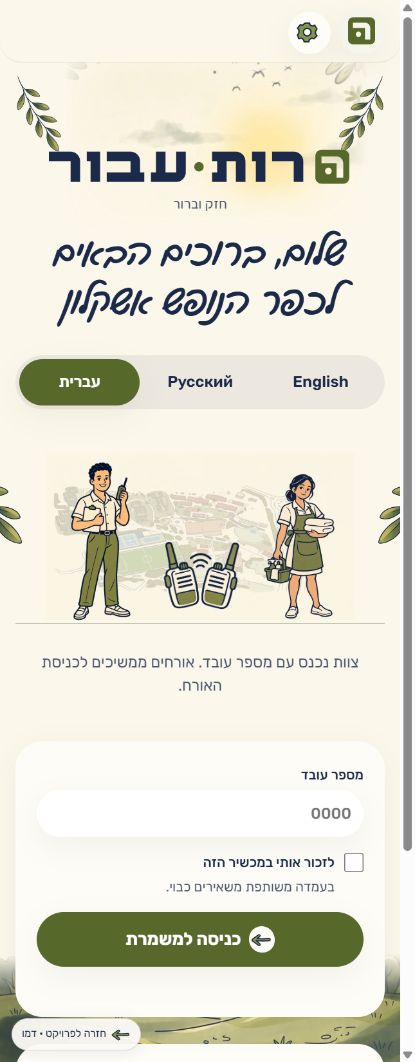
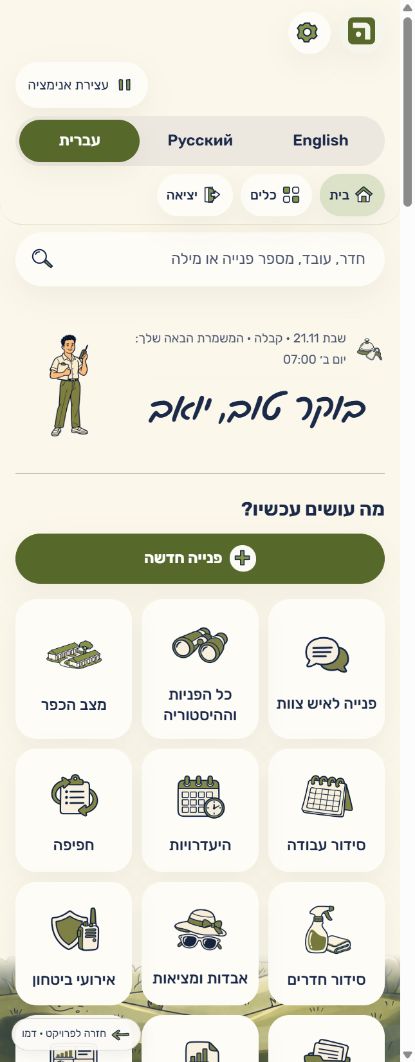
A service and operations app for the Ashkelon holiday village, connecting guests, staff and management — across languages, departments and shifts. From the first request to the next shift, information stays clear and work keeps moving.
Product and interface design, visual identity and an interactive prototype. Mobile and desktop, mockups and explanatory films.
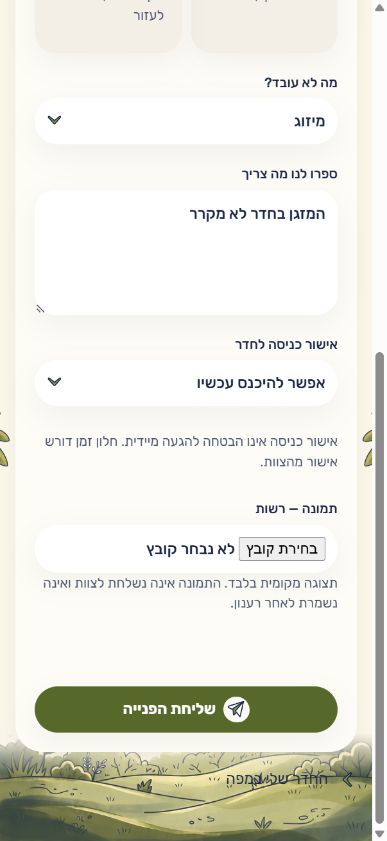
Prototype with sample data.
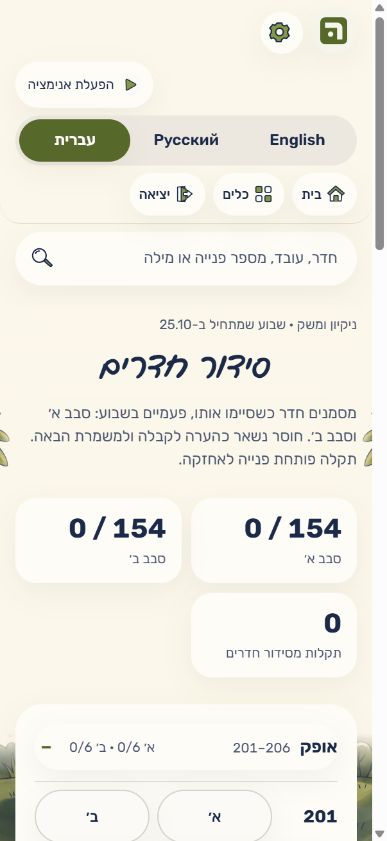
Conversations with Ashkelon holiday village staff pointed to a need for shared information across languages, roles and shifts. This led to four design decisions.
The starting point was listening to employees: conversations with Dima and Asher about coordination, responsibility and handovers, alongside a review of public hospitality and operations product documentation. My background in psychology informs how I ask questions, identify needs and translate them into product decisions. The following are summaries from my notes, not direct quotations.
Asher · Maintenance manager. He described wanting to know what was happening with employees, issues he had passed on and actions he had approved, even while at home. This informed a view that connects each request to its owner and status, alongside an overview by building. No trial of the solution by Asher was documented. Live updates remain a goal; the prototype uses local data.
Dima · Maintenance employee. He tried the app and described difficulty he had heard about from Russian-speaking housekeeping colleagues in remembering the room preparation steps. He suggested a checklist and explained that maintenance also needs to know when a room has been cleaned. This informed a checklist, records of missing supplies and a shared room status. The evidence about housekeeping is indirect, and Dima did not test the checklist after it was added.
These conversations supported need finding and design decisions. They were not a controlled usability study or a measurement of improvement.
נקודת המוצא הייתה הקשבה לעובדים: שיחות עם דימה ואשר על תיאום, אחריות והעברת מידע. לצדן סקרתי תיעוד של מוצרים בתחום האירוח והתפעול. הרקע שלי בפסיכולוגיה מכוון את הדרך שבה אני שואל שאלות, מזהה צרכים ומתרגם אותם להחלטות מוצר. השיחות מוצגות כסיכומים מתוך התיעוד שלי, ללא ציטוטים ישירים.
אשר / מנהל האחזקה
תיאר צורך לדעת מה קורה עם העובדים, התקלות שהעביר והפעולות שאישר — גם כשהוא בבית.
תובנה → תמונה שמחברת בין פנייה, אחריות ומצב טיפול.
החלטה → פניות ואחראים לצד תמונת מצב לפי בניין.
לא תועדה התנסות של אשר בפתרון. עדכונים בזמן אמת הם יעד; הדגם משתמש בנתונים מקומיים.
דימה / איש אחזקה
התנסה באפליקציה וסיפר על קושי ששמע מעובדות המשק דוברות הרוסית לזכור את שלבי סידור החדרים. הוא הציע צ׳קליסט והסביר שגם האחזקה צריכה לדעת מתי החדר נוקה.
תובנה → מידע שנוצר במשק שימושי גם למחלקה שממשיכה אחריה.
החלטה → צ׳קליסט, תיעוד חוסרים ומצב חדר משותף.
העדות על עובדות המשק עקיפה. דימה לא בדק את הצ׳קליסט לאחר הוספתו.
העדויות תמכו בזיהוי צרכים ובהחלטות עיצוב. הן אינן בדיקת שימושיות מבוקרת או מדידת שיפור.
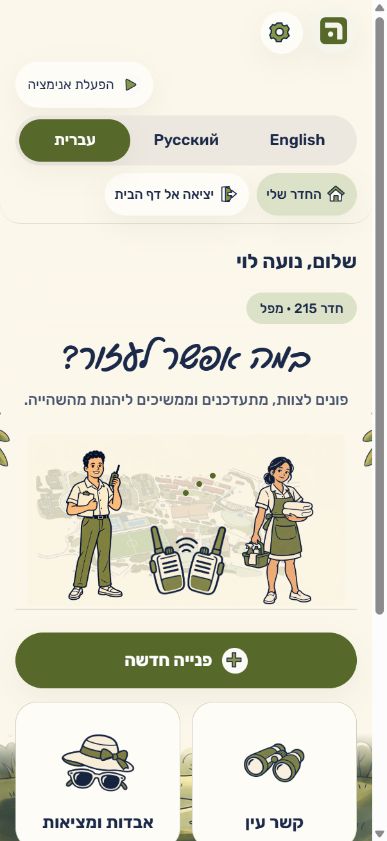
Moving between rooms and buildings, the employee coordinates with reception and housekeeping. They need the issue’s location, what is required, the room’s status and whether they can enter.
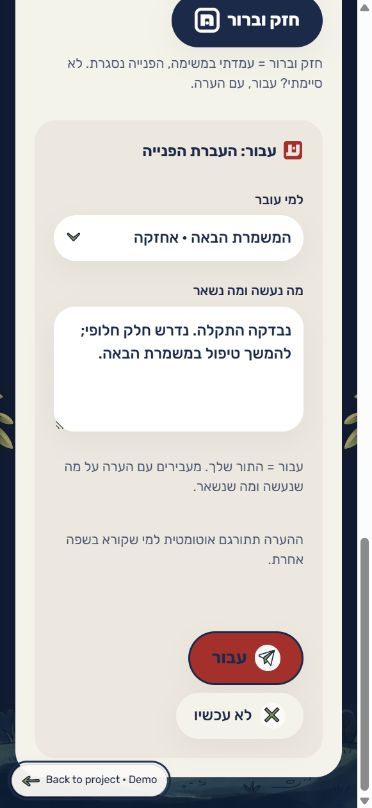
The goal is to arrive with enough information to begin and leave enough context for someone else to continue. In the example, an employee accepts an air-conditioning issue. When a replacement part is needed, they hand it over with what was checked and what remains to be done.
This persona synthesizes the needs discussed with employees, particularly in the conversation with Dima. It is not Dima’s biography or an additional research participant.
עובד האחזקה בשטח
העובד נע בין חדרים ומבנים ומתאם עם הקבלה והמשק. הוא צריך להבין היכן התקלה, מה נדרש, מה מצב החדר והאם אפשר להיכנס.
המטרה / להגיע לפנייה עם מספיק מידע כדי להתחיל, ולהשאיר מספיק מידע כדי שאחר יוכל להמשיך.
תרחיש / עובד מקבל אחריות לתקלה במזגן. אם נדרש חלק חלופי והטיפול לא מסתיים במשמרת שלו, הוא מעביר את הפנייה עם הסבר על מה נבדק ומה נשאר לבצע.
סינתזה של הצרכים שעלו בשיחות עם העובדים, ובפרט בשיחה עם דימה; אינה ביוגרפיה של דימה או משתתף נוסף במחקר.
I reviewed public documentation for hospitality and operations software, without using product accounts. The purpose was to understand existing patterns and consider their fit for the village.
Centralized tasks and communication are established patterns. Rut Avor adapts them to the team’s languages, shift handovers and the different perspectives of people working at the village. The original comparison board below records the products and patterns considered.
סקרתי תיעוד ציבורי של מערכות אירוח ותפעול, ללא התנסות בחשבונות המוצרים. המטרה הייתה להבין דפוסים קיימים ולבחון את התאמתם לעבודה בכפר.
יצירת משימה משיחת אורח ושמירת קישור ביניהן.
לשמור על ההקשר בין התקשורת לביצוע.
למקור הרשמי
בקשה עם מיקום ושיוך, תחילת טיפול וסיום.
להבחין בין פנייה שנוצרה לפנייה שמישהו מטפל בה.
למקור הרשמי
תקשורת צוות, משימות, תיעוד וחפיפות דיגיטליות.
לרכז מידע שנדרש להמשך עבודה בין מחלקות.
למקור הרשמי
ריכוז משימות ותקשורת הוא דפוס מוכר. רות עבור מתאימה אותו לשפות הצוות, למעבר בין משמרות ולנקודות המבט השונות בכפר. המקורות נבדקו בעריכת הקייס, 27.10.2026.
The documented working versions show a move from an initial reporting and request structure toward clearer location, explicit status, progressive information and the next action, with a visual language connected to the place.
The low-fidelity screen is from working version v3 and focuses on receiving a request and assigning responsibility. Its sample data and language differ from the final scenario. This comparison documents a design process, not an experiment measuring improvement.
The current side uses an updated demo capture. Only the clearly labelled v3 low-fidelity screen is retained as historical process evidence.
מעבר ממבנה ראשוני של דיווח ופנייה לממשק שמדגיש מיקום, מצב טיפול והפעולה הבאה. זהו תהליך עיצוב מתועד, לא ניסוי שמדד שיפור.
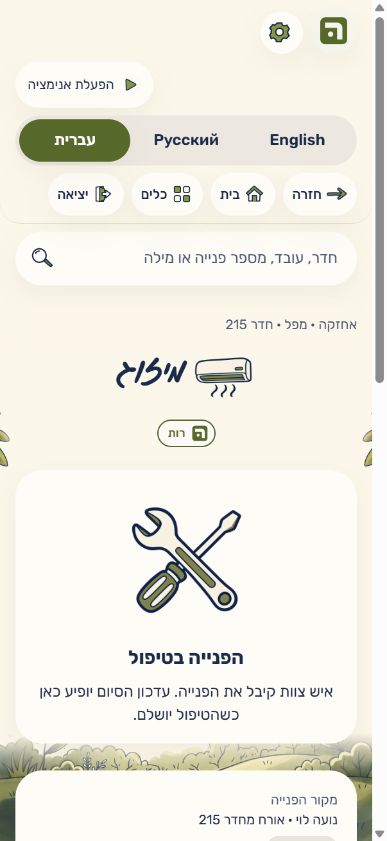
מקור low-fi מתהליך העיצוב. המבנה התמקד בקבלת הפנייה ובאחריות; נתוני הדוגמה והשפה שונים מהתרחיש הנוכחי.
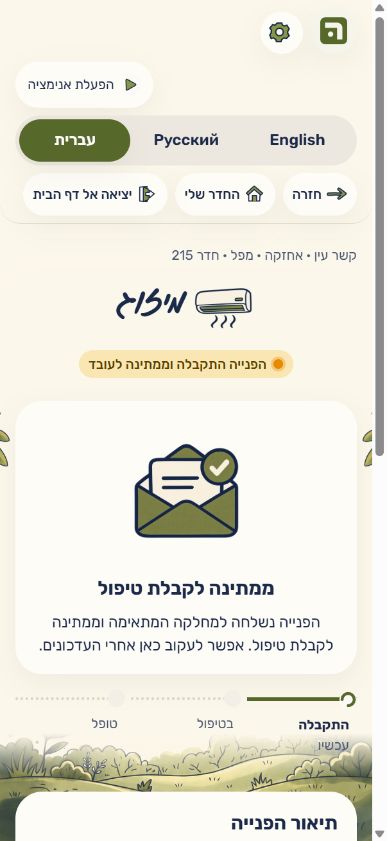
מיקום מזוהה, מצב טיפול מפורש ומידע מדורג, עם האייקונים והאיורים של המוצר הנוכחי.
The prototype demonstrates workflows with sample data stored in the browser. Message translations are predefined; live cross-device synchronization and translation of new messages require connected services. Research informed the design; operational improvement has not yet been measured.

Handwriting for headlines and the human voice of the brand.
Information, statuses and actions. Readable in the middle of a shift.











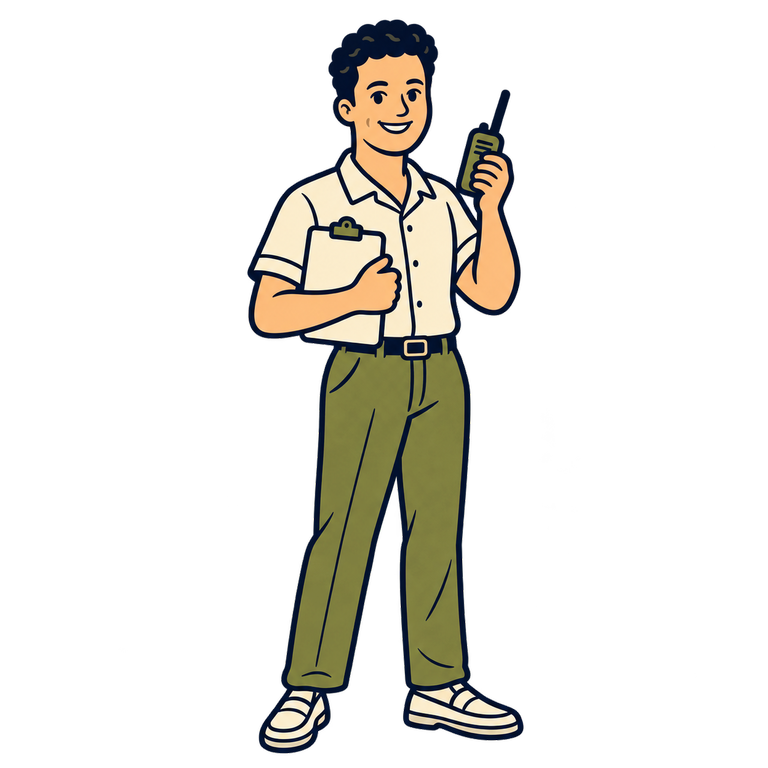
Choose a character to try their role in the prototype.





Sample data; actions are saved in your browser.
From the first introduction to handling a request · scroll inside each screen or enlarge it.
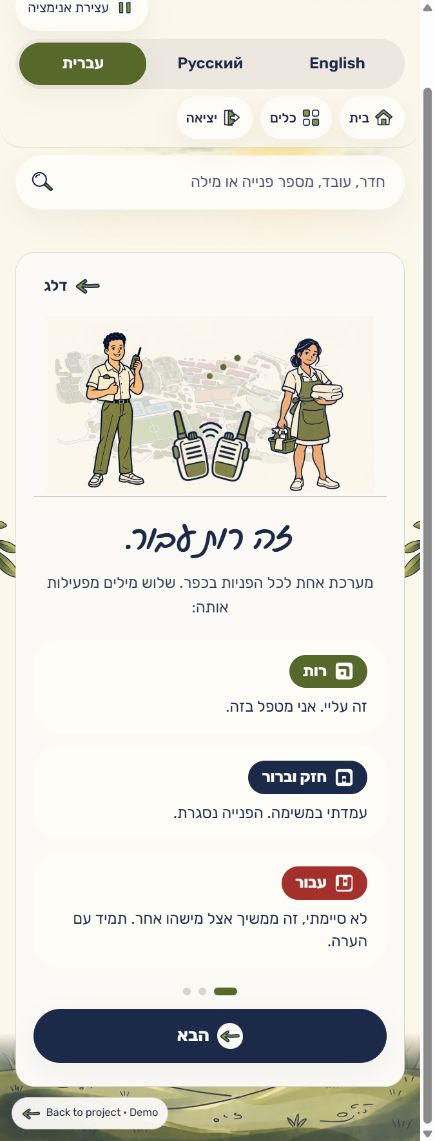
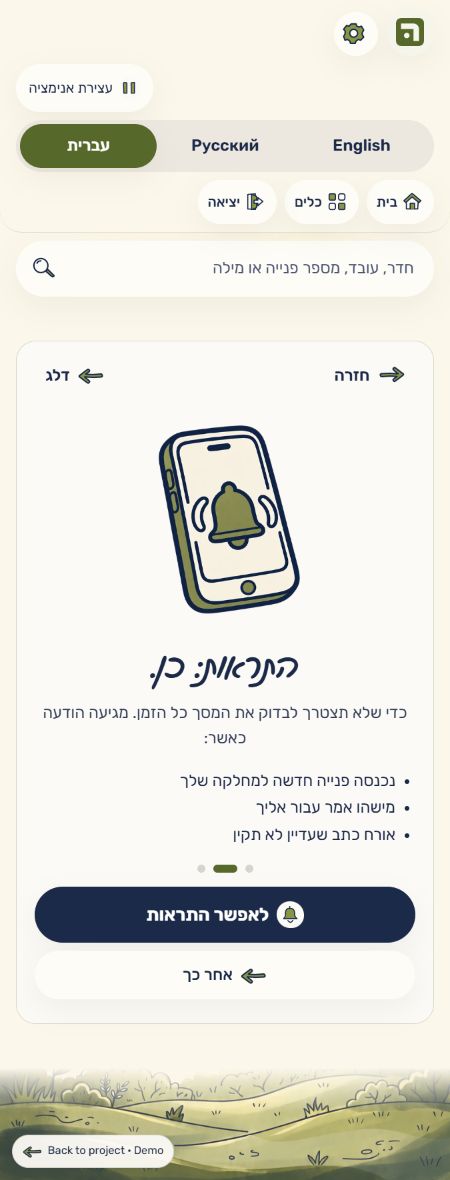
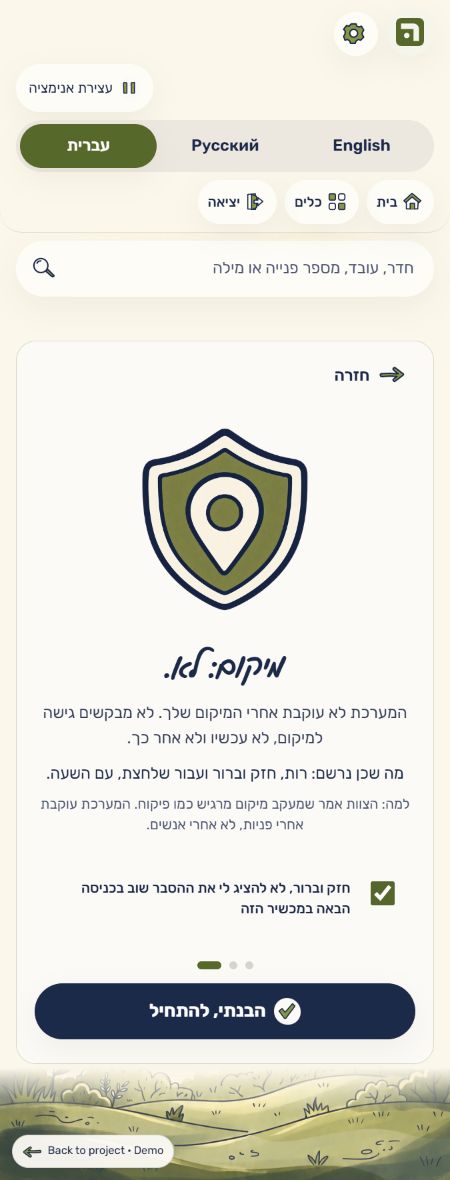
Two use scenarios from the project.
Reporting the air conditioner issue, Avi taking ownership and an update to the guest.
Checking the village overview and contacting the receptionist on shift.
Scripted demonstration scenarios. The village overview shows reported requests; it is not a fire detection system.
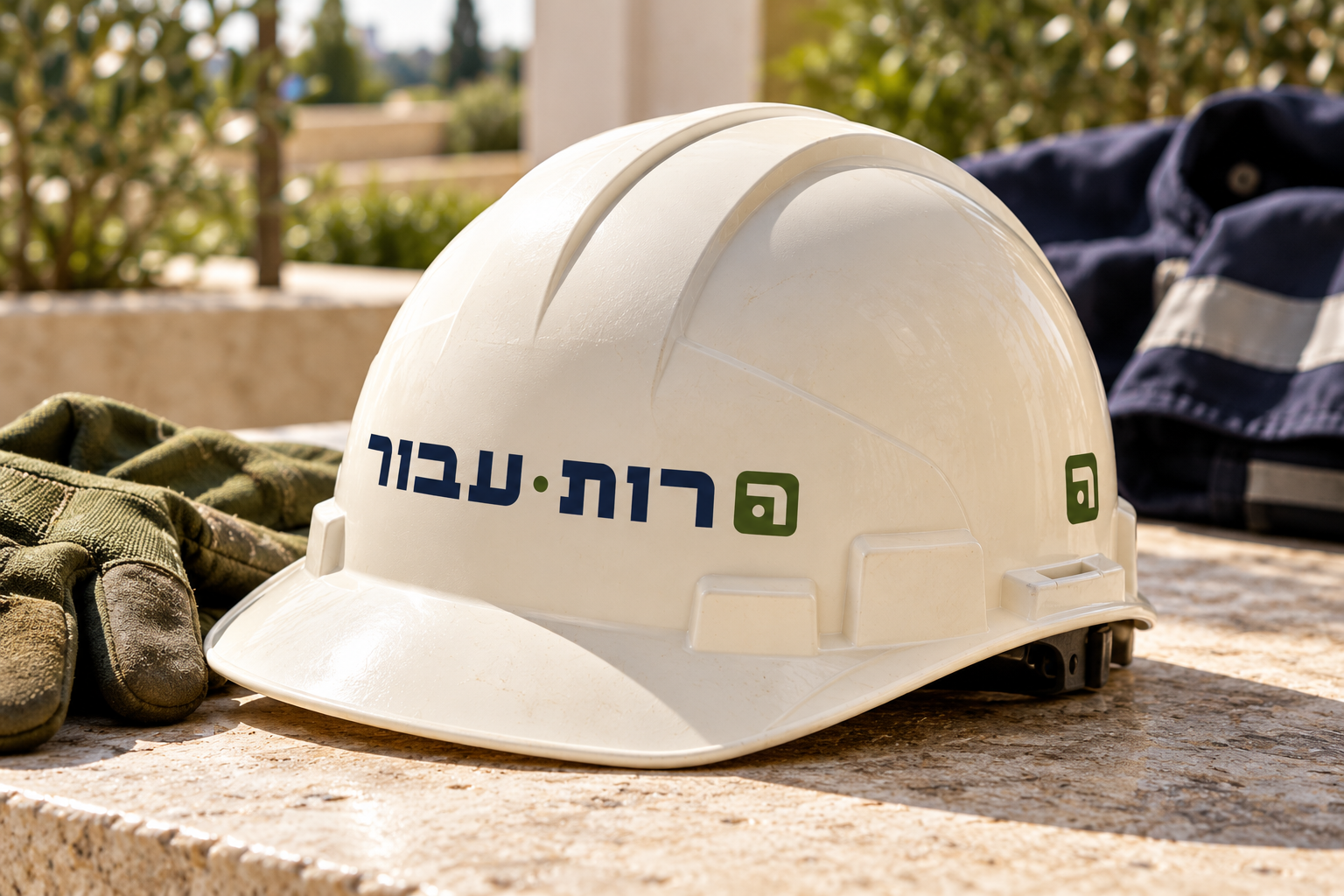
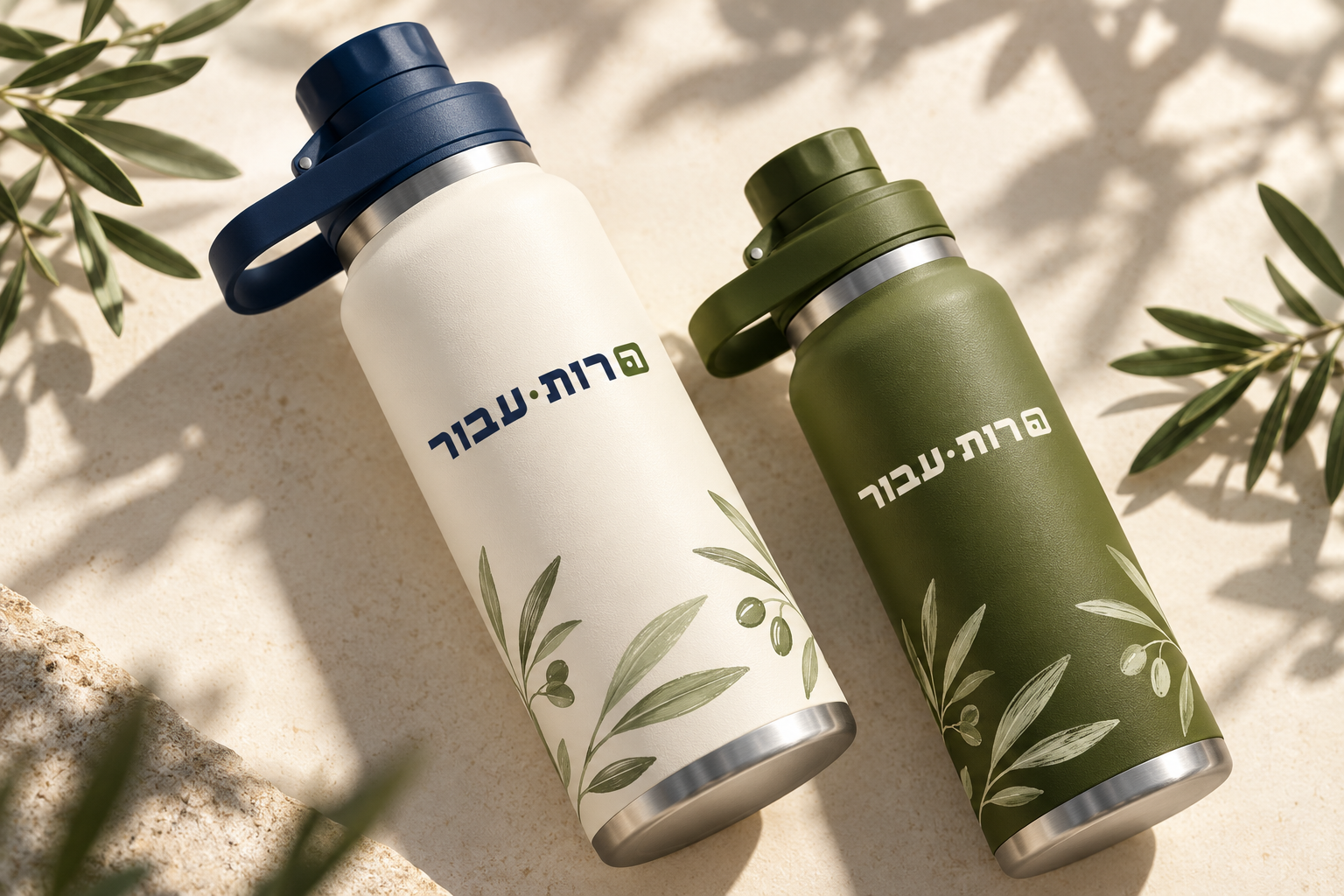
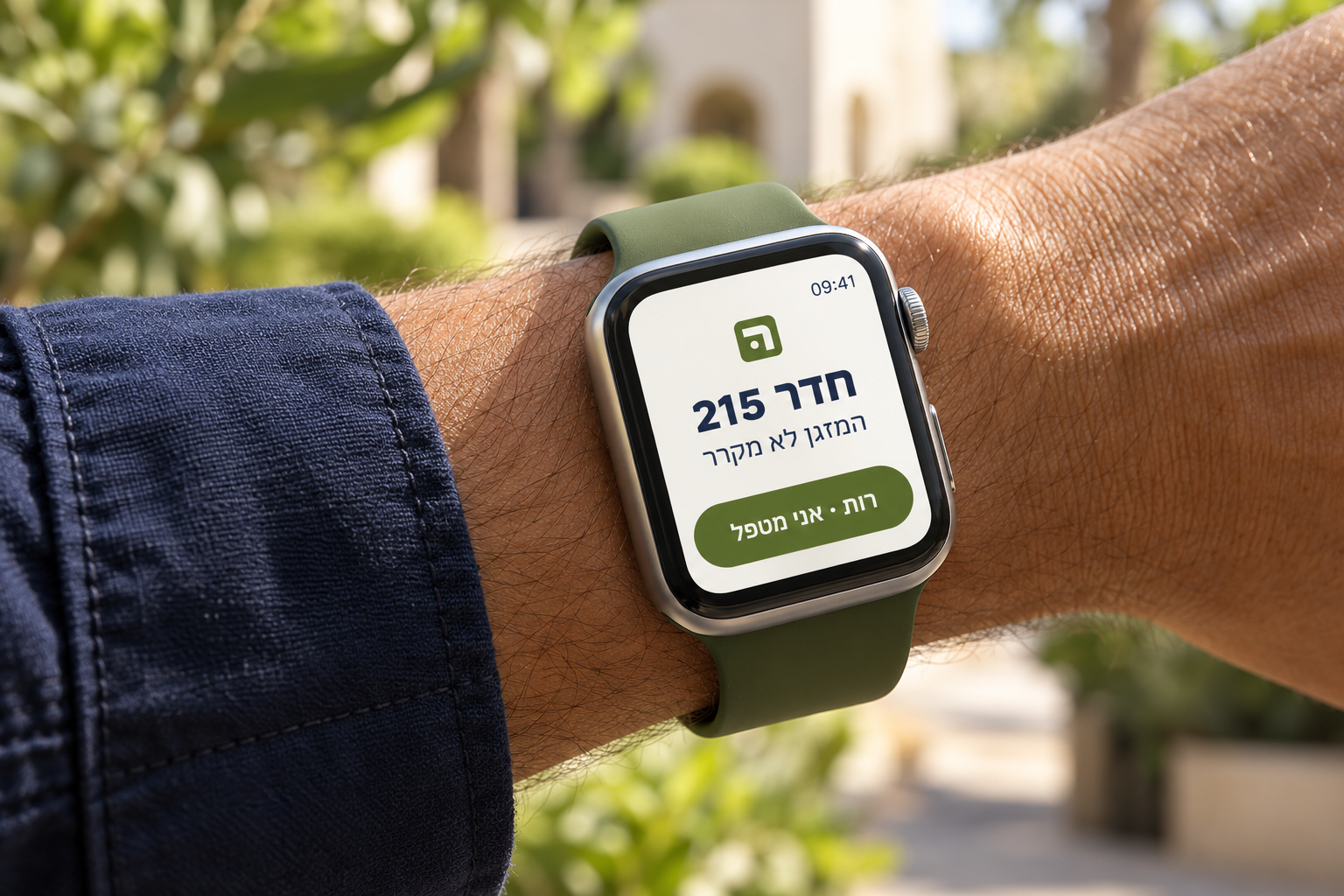
Brand application concepts: staff identification, maintenance equipment and a personal bottle.
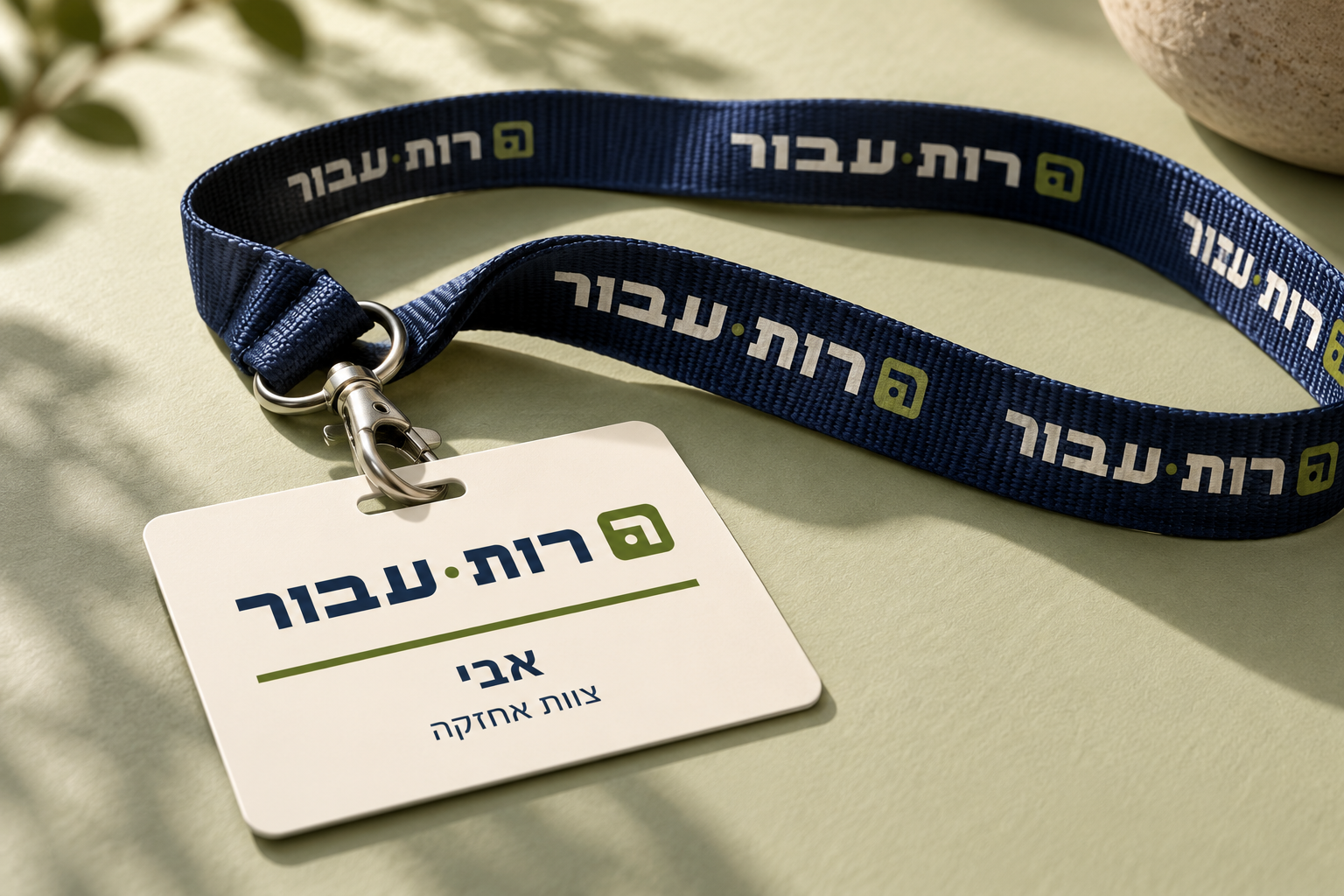
This project reinforced the need to show who is responsible and what happens next. The brand language also has a job: making the outcome of “Rut” and “Avor” predictable.
The next step is to test action comprehension, continuation from handover notes, language clarity and fit with everyday work. Operational improvement has not yet been measured.